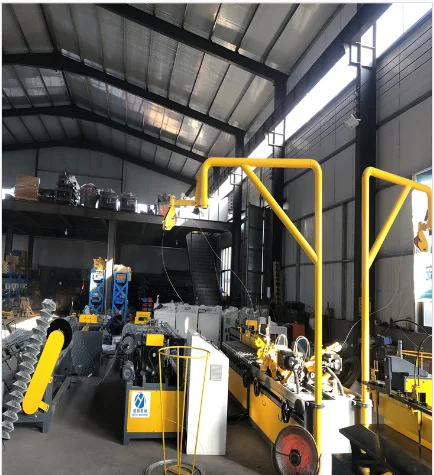
The global demand for sustainable infrastructure and erosion control has propelled the gabion wire mesh machine into a critical position within the heavy machinery sector. As cities expand and environmental protection becomes a priority, the ability to produce high-strength, durable wire mesh for stone-filled baskets is no longer just a manufacturing requirement but a necessity for global geological stability.
Investing in a high-performance gabion wire mesh machine allows producers to meet rigorous international standards for civil engineering, providing the foundational materials needed for riverbank reinforcement, retaining walls, and landslide prevention. The shift toward automation and PLC-controlled systems has transformed how these machines operate, ensuring precision and consistency in every weave.
Understanding the technical nuances of a gabion wire mesh machine—from servo motor integration to double rack stability—is essential for manufacturers aiming to optimize their production output. By bridging the gap between raw industrial power and precision engineering, these machines deliver the structural integrity required for the world's most challenging construction environments.

Industrial Significance of the Gabion Wire Mesh Machine
The gabion wire mesh machine serves as the backbone for creating heavy-duty hexagonal meshes used in soil stabilization and water management. In an era where ISO standards and environmental regulations dictate construction quality, the precision of the weave determines the longevity of the gabion baskets, ensuring they can withstand immense pressure from stone fill and external hydraulic forces.
Beyond simple production, these machines represent a leap in industrial capability, moving from manual or semi-automatic processes to heavy-type PLC systems. This evolution allows for the handling of larger wire diameters, specifically between 2.0mm and 4.0mm, which are essential for the "heavy type" applications required in large-scale government infrastructure projects worldwide.
Core Technical Components and Power Systems
At the heart of a modern gabion wire mesh machine is the integration of high-torque servo motors. By utilizing servo motors as the primary power sources, the equipment achieves a level of debugging ease and machining accuracy that traditional motors cannot match. This ensures that every twist and weave is executed with mathematical precision, reducing material waste and increasing the overall speed of the weaving process.
The structural integrity of the machine is equally vital, featuring a patented integrated double rack design. This front-and-rear dual rack configuration, where both racks are powered, provides a more streamlined structure that occupies less space while remaining significantly safer and more stable during high-speed operation. This heavy-duty build, with main engines often weighing over 18 tons, minimizes vibration and prevents mechanical drift.
To maintain these critical components, the machine employs fully enclosed lubricating oil tanks on both sides. A timed circulation lubrication method is used to continuously lubricate the motion mechanisms. This not only extends the lifespan of the wearing parts but also acts as a cleaning function, preventing dust and industrial impurities from entering the operating mechanism and causing premature damage.
Precision Engineering and PLC Control Logic
The intelligence of the gabion wire mesh machine is centered around its PLC (Programmable Logic Controller) system. This system eliminates the need for cumbersome electronic cam programming, allowing operators to adjust the equipment in any operating state at any position during the production cycle.
One of the most significant breakthroughs in this gabion wire mesh machine is the ability to switch between three, five, and seven twists with a single key press. The PLC is equipped with dual twist data, enabling the seamless arbitrary switching of the thorn shaft between intermittent rotation and continuous rotation (long and short), which is essential for different mesh specifications.
This level of control ensures that the resulting mesh size—such as the standard 5070mm, 6080mm, 7090mm, or 80100mm—is perfectly uniform. The flexibility to customize the mesh width up to 600mm or beyond allows manufacturers to cater to a wide array of custom industrial orders without needing to replace expensive hardware.
Performance Metrics and Production Efficiency
When evaluating the efficiency of a gabion wire mesh machine, the relationship between wire diameter and weaving speed is paramount. By utilizing servo-driven power and a reinforced double-rack structure, these machines can handle thick wires (up to 4.0mm) while maintaining high machining accuracy, which directly translates to lower rejection rates in the final product.
The transition from traditional cam-based systems to PLC-driven servo systems has resulted in a measurable increase in output. The ability to adjust settings on-the-fly without stopping the machine for complex reprogramming means that downtime is minimized, and the transition between different mesh sizes is nearly instantaneous.
Gabion Wire Mesh Machine System Efficiency Comparison
Global Applications in Civil Engineering
The output of a gabion wire mesh machine is utilized globally in the most demanding environments. In regions prone to flooding, such as Southeast Asia and coastal Africa, the heavy-type gabions created by these machines are essential for building permeable barriers that dissipate wave energy and prevent soil erosion along riverbanks.
Furthermore, in mountainous terrains like the Andes or the Himalayas, these machines provide the materials for critical landslide prevention. The high wire diameter (up to 4.0mm) and secure twists ensure that the mesh can hold tons of rock in place, creating stable terraces and retaining walls that protect remote villages and industrial transport routes.
Long-Term Value and Durability Advantages
The long-term commercial value of investing in a professional gabion wire mesh machine lies in its low maintenance requirements and high reliability. By utilizing self-processed core components and a heavy-duty 18-ton chassis, the machine resists the mechanical fatigue typical of lighter, lower-quality alternatives, ensuring a consistent ROI over decades of operation.
From a social and safety perspective, the precision of the weave prevents "gap failure" in gabion baskets. When a machine produces a perfect, consistent hexagonal mesh, the resulting structure is safer for the engineers and laborers installing them, as there is no risk of the mesh unraveling under the weight of the fill material.
Moreover, the integration of specialized accessories—such as the accompanying Spring Winding Machine and Gabion Wire Mesh Cutting Machine—creates a complete production ecosystem. This streamlines the workflow from raw wire drawing to final cut-to-size mesh panels, significantly reducing the cost per square meter of finished product.
Future Innovations in Mesh Weaving Technology
The future of the gabion wire mesh machine is moving toward total digitalization and "Industry 4.0" integration. We are seeing a shift toward more advanced sensors that can detect wire tension in real-time, automatically adjusting the servo motor speed to prevent wire breakage and further enhancing the machining accuracy.
Sustainability is also playing a larger role, with machines being optimized for the use of recycled galvanized steel and polymer-coated wires. As the construction industry moves toward "green infrastructure," the ability to quickly switch between different materials and mesh sizes using PLC presets will be a competitive necessity.
Ultimately, the convergence of heavier mechanical builds and smarter electronic controls will allow for the production of even larger mesh widths and heavier wire gauges, enabling the creation of "mega-gabions" for massive coastal defense projects and deep-sea erosion control.
Technical Specifications and Capacity Analysis of Heavy Type Machines
| Mesh Size (mm) |
Wire Diameter (mm) |
Twist Options |
Power Requirement |
| 50 70 |
2.0 - 4.0 |
3 / 5 / 7 |
33 kW |
| 60 80 |
2.0 - 4.0 |
3 / 5 / 7 |
35 kW |
| 70 90 |
2.0 - 4.0 |
3 / 5 / 7 |
38 kW |
| 80 100 |
2.0 - 4.0 |
3 / 5 / 7 |
42 kW |
| Custom Size |
2.0 - 4.0 |
3 / 5 / 7 |
45 kW |
| Heavy Industrial |
4.0 (Max) |
7 (High Strength) |
45 kW |
FAQS
The primary advantage is the precision and flexibility of production. A PLC system allows operators to switch between 3, 5, and 7 twists with a single key and adjust the equipment in any operating state. This eliminates the need for time-consuming electronic cam programming and manual mechanical adjustments, leading to faster setup times, higher weaving speeds, and absolute consistency in mesh size and wire tension.
Yes, the heavy-type gabion wire mesh machine is specifically designed to handle a range of wire diameters from 2.0mm up to 4.0mm. This versatility makes it suitable for both standard erosion control and heavy-duty civil engineering projects where extreme structural strength is required to hold heavy stone fill.
The patented integrated double rack design, where both the front and rear racks are powered, provides superior stability and reduces vibration during high-speed operation. This streamlined structure occupies less factory space while ensuring that the machine remains balanced, which directly improves the machining accuracy and overall safety of the equipment.
The machine features fully enclosed lubricating oil tanks on both sides using a timed circulation lubrication method. This automated system ensures that all motion mechanisms are consistently lubricated, reducing the need for manual oiling. Maintenance primarily involves checking oil levels and ensuring the circulation timers are correctly set to prevent dust and impurities from entering the mechanism.
Absolutely. While the standard mesh width is 600mm, the machine can be customized to meet specific production requirements. This flexibility, combined with the ability to produce various mesh sizes (from 5070mm to 80100mm), allows manufacturers to adapt to a wide range of global construction standards.
Servo motors provide precise control over position, speed, and acceleration. In a gabion wire mesh machine, this means the "thorn shaft" and weaving mechanisms can be controlled with extreme accuracy. This results in easier debugging, faster weaving speeds, and a significantly more stable production process compared to traditional induction motors.
Conclusion
The gabion wire mesh machine has evolved from a simple industrial tool into a sophisticated piece of precision engineering. By integrating PLC controls, servo motor power, and a reinforced double-rack structure, today's machines provide the efficiency and durability required to support the world's most critical infrastructure projects. From handling 4.0mm wire to the seamless switching of twist patterns, these technical advancements ensure that manufacturers can produce high-quality, reliable mesh for erosion control and geological stabilization.
Looking forward, the continued digitalization of weaving technology will further reduce waste and increase production speeds, making sustainable construction more accessible worldwide. For companies aiming to lead in the wire mesh industry, investing in heavy-duty, automated equipment is the only way to ensure long-term competitiveness and structural reliability. Visit our website for more information: www.htmeshmachines.com