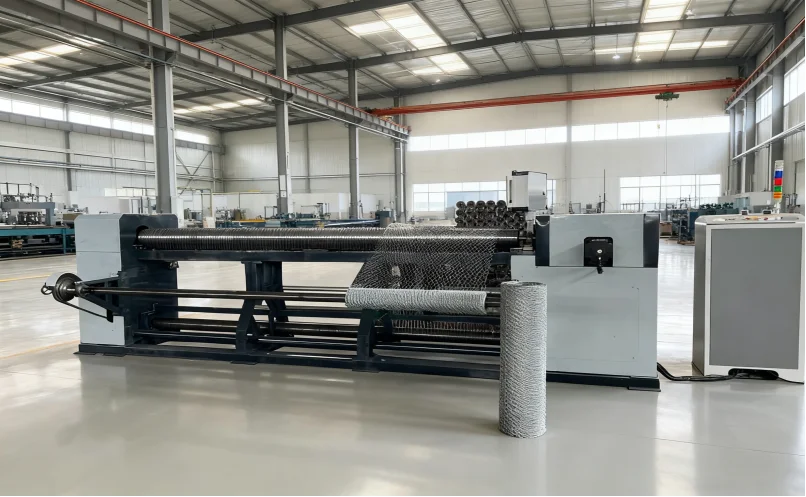
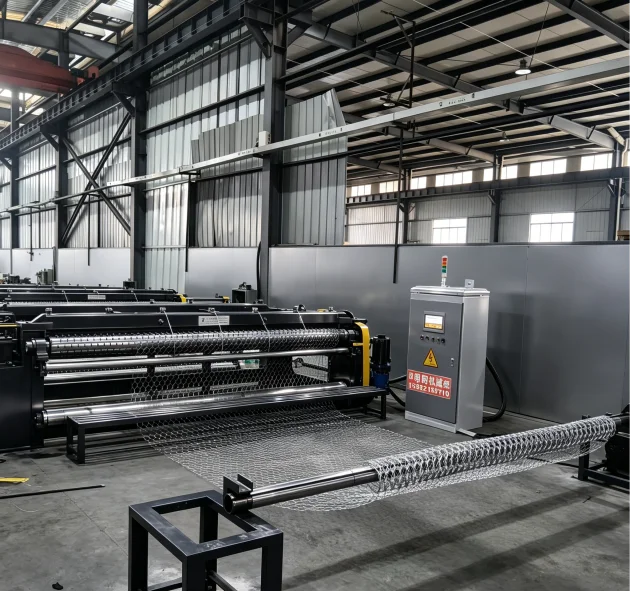
The global demand for robust erosion control and civil engineering solutions has propelled the importance of high-quality gabion structures. At the heart of this production is the gabion wire mesh machine, a sophisticated piece of industrial equipment designed to weave heavy-duty wire into the precise hexagonal or rectangular grids required for retaining walls and riverbank stabilization. Understanding the mechanics and capabilities of these machines is essential for manufacturers aiming to meet international construction standards.
In an era where infrastructure sustainability is paramount, the efficiency of a gabion wire mesh machine directly impacts the cost and reliability of large-scale environmental projects. From preventing soil erosion in mountainous regions to reinforcing coastal defenses, the precision of the weave ensures that the resulting baskets can withstand immense pressure and environmental degradation over decades. The transition toward automated, PLC-controlled systems has revolutionized how these meshes are produced, increasing output while maintaining strict tolerances.
For professionals in the specialized equipment manufacturing sector, investing in a high-performance gabion wire mesh machine means bridging the gap between raw steel wire and critical infrastructure. By leveraging advanced servo motor technology and patented rack designs, modern machinery can now produce a variety of mesh sizes and wire diameters, ensuring that every project—regardless of scale—has access to durable, high-tensile wire mesh products.

Technical Specifications of Heavy Type Machines
The heavy-type gabion wire mesh machine is engineered to handle substantial wire diameters, typically ranging from 2.0mm to 4.0mm, making it ideal for industrial-grade applications. These machines are capable of producing various mesh sizes, including standard 5070mm, 6080mm, 7090mm, and 80100mm, with the flexibility to customize widths up to 600mm or more depending on the specific project requirements.
To support these heavy-duty operations, the machinery is built with a massive main engine weighing over 18 tons. This ensures that the machine remains stable and vibration-free even when weaving thick wire at high speeds. The integration of specialized cutting and spring winding machines further completes the production line, allowing for a seamless transition from raw wire to finished gabion rolls.
Advanced Control Systems and Servo Technology
Modern production requires a shift away from cumbersome electronic cam programming. The latest PLC-driven gabion wire mesh machine eliminates the need for complex debugging processes by implementing a more intuitive control interface. This allows operators to adjust the equipment in any operating state at any position during the operation, providing unprecedented flexibility on the factory floor.
One of the most significant technological leaps is the use of servo motors as the primary power source. Unlike traditional motors, servo motors provide precise control over movement and positioning, which simplifies the debugging process and significantly increases machining accuracy. This precision is critical when switching between different twist configurations, ensuring that the mesh remains uniform throughout the roll.
Furthermore, the PLC is equipped with dual twist data capabilities. With a single key press, the operator can switch between three, five, and seven twists. This adaptability allows a single machine to produce different grades of mesh for various stability requirements, whether it be for light landscaping or heavy-duty hydroelectric dam reinforcement.
Patented Structural Design for Stability
The physical architecture of a gabion wire mesh machine is just as important as its electronic brain. A key innovation is the patented integrated double rack design. By utilizing front and rear dual racks, both of which are powered, the machine achieves a more streamlined structure that occupies less space during rack movement while enhancing overall stability.
Stability is further enhanced by the sheer mass of the core components. By self-processing core components and maintaining a main engine weight of over 18 tons, the gabion wire mesh machine minimizes mechanical drift. This structural integrity is what allows the machine to maintain high machining accuracy even when processing the upper limit of its 4.0mm wire diameter capacity.
This integrated approach not only improves safety for the operators but also extends the lifespan of the equipment. The reduced vibration and optimized load distribution prevent premature wear on the weaving elements, ensuring that the gabion wire mesh machine remains a productive asset for years of continuous industrial use.
Operational Efficiency and Weaving Speed
Efficiency in wire weaving is measured by the balance between speed and precision. Thanks to the optimized mechanical structure and servo-driven power, the current generation of these machines offers significantly faster weaving speeds without compromising the tightness of the twists. This means a higher daily output of mesh rolls, reducing the lead time for large-scale construction projects.
The ability to arbitrarily switch between intermittent and continuous rotation of the thorn shaft is a game-changer. By removing the constraints of traditional cam-based systems, the machine can adapt its rotation (long or short) instantly, allowing for rapid adjustments and reduced downtime during product changeovers.
Performance Comparison of Gabion Weaving Methods
Maintenance and Lubrication Systems
Industrial machinery often fails due to contamination and poor lubrication. To combat this, the heavy-duty gabion wire mesh machine features fully enclosed lubricating oil tanks on both sides of the equipment. This design ensures that the critical moving parts are shielded from the dusty environments typical of wire mills and construction factories.
A timed circulation lubrication method is adopted, which serves a dual purpose: it provides a constant supply of fresh oil to the motion mechanism and acts as a cleaning agent to flush out impurities. By preventing dust and metal shavings from entering the operating mechanism, the system drastically reduces the risk of mechanical wear and sudden breakdowns.
Global Applications in Civil Engineering
The output from a high-quality gabion wire mesh machine is utilized globally in some of the most challenging environments. In riverine areas, gabion baskets filled with stone are used to prevent bank erosion and manage water flow, protecting nearby communities from flooding. The durability of the 2.0-4.0mm wire ensures these structures remain intact under constant hydraulic pressure.
In mountainous regions, these machines provide the necessary materials for slope stabilization. By creating flexible, permeable walls, gabions allow water to drain while holding back massive amounts of earth, preventing landslides. This application is critical for the safety of highways and railway lines in rugged terrains.
Beyond infrastructure, gabions are increasingly used in sustainable architecture and urban landscaping. The ability to customize mesh size and twist count allows architects to create aesthetic yet functional retaining walls that integrate naturally with the environment, proving that the gabion wire mesh machine is essential for both engineering and ecology.
Comparison of Twist Configurations
One of the defining features of a professional gabion wire mesh machine is its ability to handle different twist counts. The choice between three, five, or seven twists depends entirely on the required strength and flexibility of the final mesh. More twists generally provide a tighter, more rigid lock, which is essential for heavy-duty retaining walls.
The transition between these settings is now automated via the PLC. Historically, changing the twist count required extensive mechanical reconfiguration and downtime. With the current dual twist data system, this process is reduced to a single key press, allowing manufacturers to pivot their production based on order requirements almost instantaneously.
Choosing the right twist is a balance of material cost and structural necessity. While a seven-twist mesh offers maximum security, a three-twist mesh may be more cost-effective for light-duty applications. The flexibility of the modern machine allows the producer to optimize these variables for every specific client need.
Technical Performance Analysis of Twist Configurations
| Twist Type |
Structural Rigidity |
Production Speed |
Primary Use Case |
| 3-Twist Mesh |
Moderate (6/10) |
Very High |
Garden Walls/Light Erosion |
| 5-Twist Mesh |
High (8/10) |
High |
Riverbank Protection |
| 7-Twist Mesh |
Extreme (10/10) |
Moderate |
Hydroelectric Dams |
| Custom 2.0mm Wire |
Standard (5/10) |
Maximum |
Commercial Fencing |
| Custom 4.0mm Wire |
Heavy Duty (9/10) |
Controlled |
Military Fortifications |
| Variable Width 600mm |
Variable |
Consistent |
Custom Site Retainers |
FAQS
Our PLC heavy-type machine is designed to process wire diameters ranging from 2.0mm to 4.0mm. This wide range allows manufacturers to produce everything from light decorative mesh to extremely heavy-duty industrial gabions used in dam construction and military fortifications.
Unlike cumbersome electronic cam programming, our PLC system allows for real-time adjustments in any operating state. It enables the arbitrary switching between intermittent and continuous rotation of the thorn shaft and allows the operator to change twist counts (3, 5, or 7) with a single key press, drastically reducing debugging time.
The massive weight of the main engine ensures maximum stability and minimizes vibration during high-speed weaving. In heavy-duty wire production, vibration can lead to machining inaccuracies and premature wear; a heavy, stable frame ensures a consistent weave and a longer machine lifespan.
The machine features fully enclosed oil tanks and a timed circulation lubrication method. This prevents dust and industrial impurities from entering the mechanism, while the circulating oil continuously lubricates and cleans the moving parts, preventing friction-based wear and tear.
Yes, while standard sizes like 5070mm and 80100mm are common, the machine is designed for customization. Widths around 600mm are standard but can be adjusted to meet specific client requirements for different civil engineering projects.
The patented integrated double rack design reduces the space required for rack movement, creating a more streamlined factory layout. Because both the front and rear racks are powered, the machine is more stable and safer during operation compared to single-rack designs.
Conclusion
The evolution of the gabion wire mesh machine from manual or cam-driven systems to PLC-controlled, servo-powered heavy machinery has fundamentally changed the landscape of erosion control and civil engineering. By integrating patented double-rack designs, high-mass structural stability, and intelligent lubrication systems, manufacturers can now produce high-tensile, precise wire mesh that meets the most rigorous global standards. The ability to rapidly switch between twist configurations and wire diameters ensures that production remains flexible and efficient in a demanding market.
As the world moves toward more sustainable and resilient infrastructure, the role of high-quality gabion products will only grow. Investing in advanced weaving technology is not just about increasing output, but about ensuring the safety and longevity of the bridges, dams, and coastlines of tomorrow. For those seeking to lead in the specialized equipment sector, adopting these automated, heavy-duty solutions is the key to operational excellence. Visit our website: www.htmeshmachines.com