Hit enter to search or ESC to close
The global demand for high-quality fencing and industrial screening has led to a significant evolution in wire processing technology. Among these advancements, the specialized machinery used to create hexagonal patterns stands out as a critical asset for manufacturers serving the agricultural, construction, and decorative sectors.
Efficiency in wire weaving is no longer just about speed, but about the precision of the twist and the versatility of the materials handled. Modern industrial standards require equipment that can minimize waste while maximizing the structural integrity of the mesh, ensuring that the final product can withstand diverse environmental stresses.
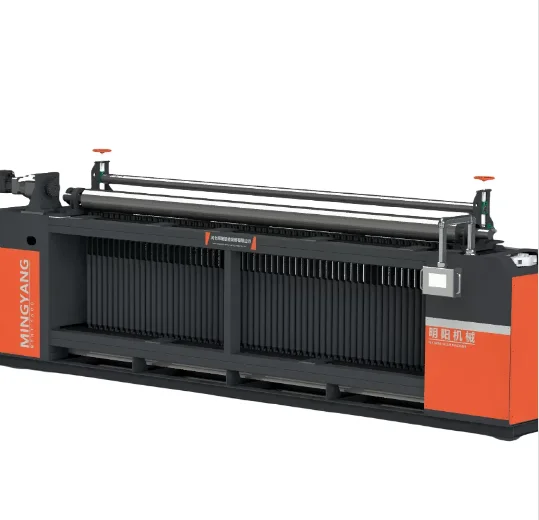
For businesses looking to scale their production, investing in a high-performance hexagonal wire mesh machine is the most effective way to reduce labor costs and improve output consistency across various mesh sizes.
The transition toward positive twisted hexagonal mesh machines marks a significant leap in engineering. By introducing a new design that allows for a minimum mesh size of 10mm, manufacturers can now produce much finer nets that were previously difficult to achieve with traditional weaving methods.
This evolution is further supported by the adoption of horizontal structures. Unlike older vertical or semi-vertical models, the horizontal configuration ensures that the hexagonal wire mesh machine runs more smoothly, reducing vibration and extending the lifespan of the mechanical parts.
The modern hexagonal weaving system is built around the principle of synchronized motion and precise tension control. The integration of a PLC (Programmable Logic Controller) has transformed the operation from a manual, labor-intensive process into a streamlined automated workflow.
By utilizing a PLC-driven system, the complexity of adjusting parameters is removed, allowing the equipment to maintain consistent twist counts and mesh widths. This automation ensures that the output remains uniform regardless of the production run length.
Furthermore, the reduced footprint of contemporary designs means that factories can optimize their floor space. Smaller, more efficient machines allow for a higher density of production lines without sacrificing the safety or mobility of the operators.
One of the most critical advantages of a high-end hexagonal wire mesh machine is its ability to handle a wide variety of materials. Whether the project requires galvanized iron wire for rust resistance or plastic-coated wire for aesthetic and environmental protection, the machine adapts seamlessly.
The capacity to process different wire diameters—ranging from 0.38mm for delicate tasks up to 1.5mm for heavy-duty applications—makes the hexagonal wire mesh machine an indispensable tool for diversified product lines.
This flexibility extends to the final application. From producing small-scale mesh for floral decoration and wedding arrangements to larger, rugged mesh for industrial pipeline insulation and breeding fences, the equipment provides a comprehensive solution.
Maximizing throughput while minimizing energy consumption is the primary goal of modern industrial design. The latest iterations of weaving equipment have focused on reducing electricity consumption through optimized motor efficiency and reduced mechanical friction.
The combination of a horizontal layout and a high-torque motor allows for a stable weave even at higher speeds. This results in a significant reduction in operational costs per meter of mesh produced, enhancing the overall profitability for the manufacturer.
The output of a hexagonal wire mesh machine finds its way into a vast array of global industries. In the agricultural sector, it is essential for creating livestock pens and breeding enclosures that provide security without obstructing airflow.
Beyond farming, these machines support the construction industry by providing mesh for pipeline insulation and reinforced structural fillers. Additionally, the trend toward creative floral design and wedding decorations has created a niche market for the fine-gauge mesh produced by these specialized weavers.
Labor costs are one of the most significant overheads in the manufacturing of wire products. By implementing PLC-controlled systems, the requirement for skilled manual oversight is drastically reduced, allowing just two operators to manage the entire production cycle.
This reduction in manpower does not come at the expense of quality; rather, it enhances it. Human error in twisting and tensioning is replaced by digital precision, which leads to fewer rejected batches and less raw material waste.
From a long-term financial perspective, the combination of lower electricity consumption and reduced labor needs ensures a faster return on investment (ROI) for companies upgrading their hexagonal wire mesh machine fleet.
Choosing the right machine requires a deep understanding of the correlation between mesh size, wire diameter, and motor power. For instance, producing a 10mm mesh requires a different torque profile than producing a 55mm mesh, which is why motor specifications vary from 3KW up to 5KW across different models.
Customization is key to meeting specific market demands. The ability to integrate spring winding and spool winding machines into the production line allows manufacturers to offer finished rolls of mesh that are ready for immediate shipping and installation.
The following analysis summarizes the technical capabilities and output potential based on the core machine parameters.
| Mesh Size (mm) | Wire Dia. Range (mm) | Motor Power (KW) | Application Suitability |
|---|---|---|---|
| 10mm | 0.38 - 0.5 | 3 | Floral & Decoration |
| 20mm | 0.38 - 0.8 | 5 | Poultry Breeding |
| 30mm | 0.38 - 1.0 | 7 | Pipeline Insulation |
| 40mm | 0.4 - 1.2 | 8 | Garden Fencing |
| 50mm | 0.4 - 1.5 | 10 | Industrial Screening |
| 55mm | 0.5 - 1.5 | 12 | Heavy Duty Fencing |
The latest design of the positive twisted hexagonal wire mesh machine can achieve a minimum mesh size of 10mm, making it ideal for delicate applications such as floral decorations and specialized breeding nets.
Yes, the equipment is highly versatile and can weave both galvanized iron wire and plastic-coated wire without requiring significant reconfiguration, ensuring flexibility for various industrial needs.
Thanks to the simplified PLC operation, the machine can be efficiently managed by only two people, which significantly reduces long-term labor costs for the manufacturing plant.
The horizontal structure provides greater stability during high-speed operation, resulting in smoother running, less mechanical wear, and a more consistent weave quality compared to traditional designs.
Absolutely. The machine is designed to manufacture customized types of hexagonal mesh, allowing operators to adjust wire diameters and mesh widths to meet specific client requirements.
For heavier wire diameters (up to 1.5mm) and larger mesh sizes (50mm-55mm), a higher capacity motor (up to 12KW in some configurations) is recommended to ensure stable torque and continuous production.
The integration of PLC automation, horizontal structural design, and multi-material compatibility has redefined the capabilities of the hexagonal wire mesh machine. By reducing labor requirements and energy consumption while expanding the range of producible mesh sizes from 10mm to 55mm, these machines provide a sustainable and scalable solution for modern wire weaving industries.
As global demand for specialized fencing and insulation continues to grow, investing in high-precision, energy-efficient machinery is no longer optional but a necessity for competitive manufacturing. We encourage producers to evaluate their current throughput and consider upgrading to automated systems to secure long-term operational efficiency. Visit our website: www.htmeshmachines.com

If you are interested in our products, you can choose to leave your information here, and we will be in touch with you shortly.