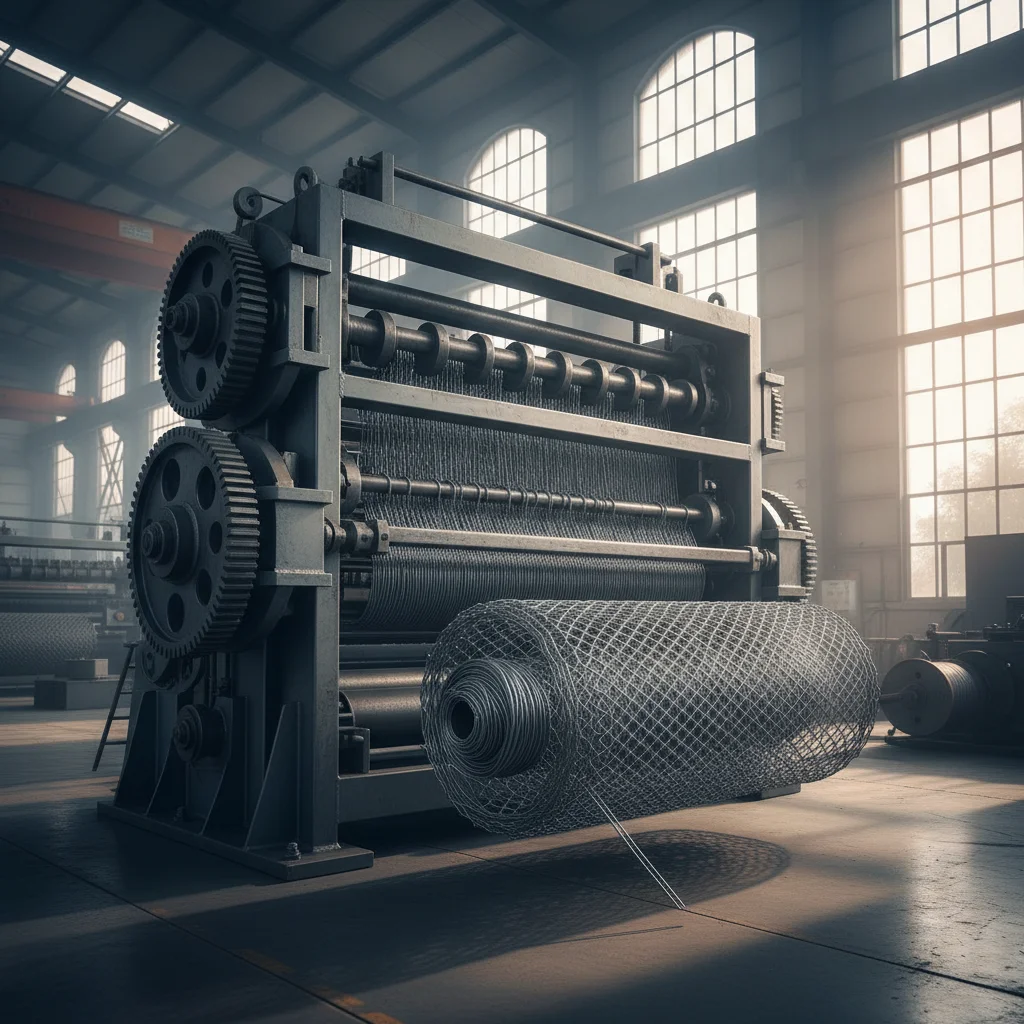
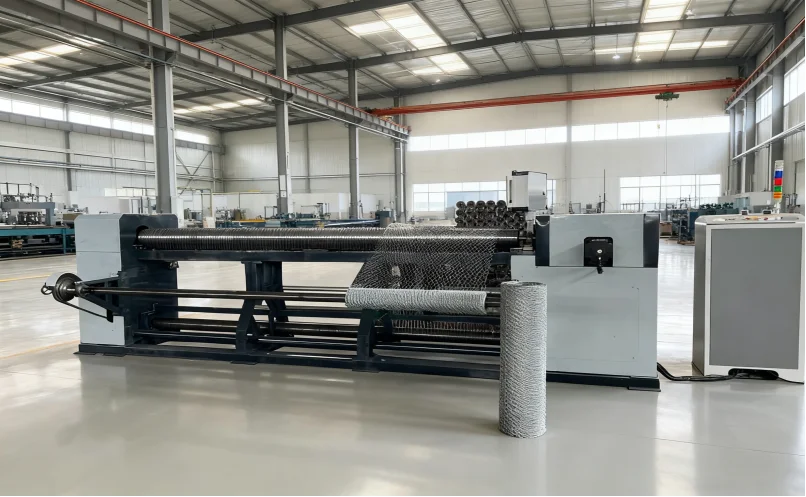
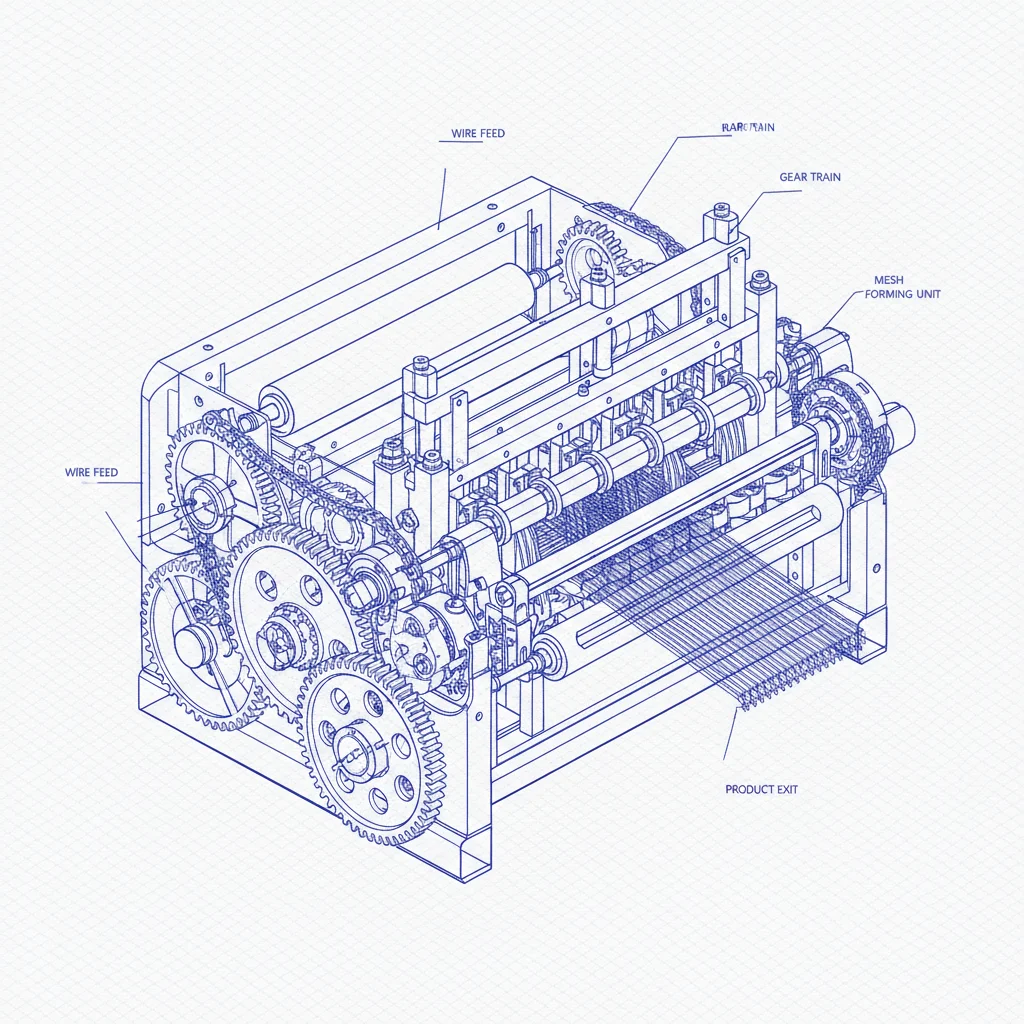
The global demand for durable erosion control and civil engineering solutions has led to a significant increase in the utilization of high-quality gabion baskets. To meet this demand, the industry relies on the precision and efficiency of the gabion wire mesh machine, which automates the complex process of weaving heavy-duty wire into stable, stone-filled structures. These machines are essential for creating the structural integrity required for riverbank stabilization, retaining walls, and landslide prevention.
Modern infrastructure projects now prioritize sustainability and longevity, necessitating equipment that can handle heavy-gauge wires without compromising weaving speed. The evolution of the gabion wire mesh machine has shifted from manual or semi-automatic processes to fully integrated PLC-controlled systems. This transition allows manufacturers to produce mesh with extreme accuracy, ensuring that every basket meets strict international engineering standards for safety and durability.
Investing in a professional-grade gabion wire mesh machine is no longer just about production volume; it is about achieving a competitive edge through technical precision and reduced waste. By integrating servo motors and advanced lubrication systems, these machines provide the reliability needed for large-scale industrial output, empowering construction firms to deploy sustainable soil-reinforcement solutions across various challenging terrains globally.

Technical Innovation of the Gabion Wire Mesh Machine
The latest advancements in the gabion wire mesh machine center around the transition to fully automated, heavy-type architectures. One of the most significant breakthroughs is the patented integrated double rack design, which optimizes the footprint of the equipment while enhancing overall stability. This streamlined structure reduces the space required for rack movement, making the production floor safer and more efficient for operators.
Furthermore, the ability to adjust equipment in any operating state at any position during operation represents a leap in flexibility. By eliminating cumbersome electronic cam programming, modern machines allow for the arbitrary switching between intermittent and continuous rotation of the thorn shaft. This ensures that manufacturers can adapt to different mesh requirements rapidly without lengthy downtime for reconfiguration.
Core Components and Mechanical Design
At the heart of a professional gabion wire mesh machine is a robust mechanical framework designed to withstand the stresses of weaving thick wire diameters ranging from 2.0mm to 4.0mm. The use of a main engine weighing over 18 tons ensures that the machine remains vibration-free even at high weaving speeds, which is critical for maintaining the geometric precision of the mesh size, such as the common 5070mm or 80100mm configurations.
Lubrication is another critical component of the mechanical design. To prevent dust and impurities from damaging the internal operating mechanisms, these machines utilize fully enclosed lubricating oil tanks on both sides. The timed circulation lubrication method ensures that every motion mechanism is consistently coated in oil, which not only reduces wear and tear but also provides a continuous cleaning function to remove metallic debris.
The integration of front and rear dual racks, both powered independently, allows for a more balanced distribution of force during the weaving process. This dual-rack power system, combined with self-processed core components, ensures that the machine maintains high machining accuracy and faster weaving speeds compared to traditional single-rack designs, ultimately increasing the daily output of the facility.
The Role of PLC and Servo Control Systems
The intelligence of a modern gabion wire mesh machine is driven by a high-performance PLC (Programmable Logic Controller). This system manages the complex timing and coordination of the weaving process, allowing for precise control over the number of twists. Whether the project requires 3, 5, or 7 twists, the PLC enables the operator to switch between these settings with a single keypress, eliminating the need for manual mechanical adjustments.
Beyond timing, the adoption of servo motors as the primary power source for all moving parts has revolutionized the debugging process. Unlike traditional motors, servo motors provide exact positional feedback and torque control, which means a gabion wire mesh machine can be calibrated with much higher accuracy. This leads to a significant reduction in material waste during the initial setup phase of a production run.
The synergy between the PLC and servo drives allows for "dual twist data" management, ensuring that the weaving pattern remains consistent across the entire width of the mesh, which can be customized up to 600mm or more. This level of digital control ensures that the resulting gabions have uniform strength and stability, which is a non-negotiable requirement for heavy-duty civil engineering applications.
Performance Metrics and Efficiency Analysis
Evaluating the efficiency of a gabion wire mesh machine involves analyzing its ability to handle heavy wire gauges while maintaining a high output speed. The transition to servo-driven systems has shifted the performance curve upward, allowing for faster weaving cycles without the loss of accuracy. When compared to older mechanical cam systems, the modern PLC-driven approach reduces setup time by nearly 70%.
Another key metric is the stability of the weave under high tension. Because these machines are built with a massive 18-ton frame, they exhibit minimal deflection, ensuring that the mesh width remains constant throughout the production run. This precision reduces the number of defective units and ensures that the final gabion baskets fit together perfectly on-site.
Gabion Wire Mesh Machine Performance Comparison
Global Industrial Applications and Use Cases
The products manufactured by a gabion wire mesh machine are utilized in diverse environments, from high-altitude mountain roads to coastal defenses. In regions prone to landslides, these machines produce the heavy-duty mesh needed for soil reinforcement, where the baskets are filled with local stone to create flexible yet strong gravity walls that can adapt to ground movement.
In urban development, gabion walls are increasingly used for architectural landscaping and sound barriers along highways. The versatility of the gabion wire mesh machine allows manufacturers to create different mesh sizes (such as 6080mm or 7090mm) to match the specific stone sizes available in different geographical regions, ensuring optimal fill density and structural stability.
Operational Advantages and Long-Term Value
The long-term value of investing in a high-end gabion wire mesh machine lies in its operational reliability and low maintenance requirements. The timed circulation lubrication system significantly extends the lifespan of the moving parts, reducing the frequency of costly repairs and unplanned downtime. For a factory owner, this means a more predictable production schedule and a lower total cost of ownership over the machine's lifecycle.
Moreover, the use of servo motors reduces energy consumption compared to traditional high-power induction motors that run constantly. By only drawing the necessary power for each movement, the gabion wire mesh machine helps manufacturers reduce their carbon footprint while maintaining high production volumes, aligning with global trends toward green manufacturing.
From a quality control perspective, the precision of the PLC system ensures that every meter of mesh produced is identical. This consistency is vital when supplying government infrastructure projects, where strict adherence to technical specifications is required for safety certification. The ability to quickly switch twist settings also allows the manufacturer to enter multiple market segments without needing separate machines for different products.
Technical Parameters and Specifications
Selecting the right gabion wire mesh machine requires a deep understanding of the technical parameters. The heavy-type PLC machines are designed to accommodate a wide range of mesh sizes, starting from 5070mm up to 80100mm, with the width typically set at 600mm but customizable to meet specific client needs. This flexibility ensures the machine can be used for various types of gabion baskets and mattresses.
Wire diameter capability is another crucial factor; these machines are optimized for 2.0mm to 4.0mm wire, which is the industry standard for heavy-duty erosion control. The power requirement ranges from 33kW to 45kW, reflecting the heavy-duty nature of the servo-driven dual-rack system. This power ensures that the machine can weave thick wires at high speeds without stalling or losing tension.
To complete the production line, these machines are often paired with complementary equipment such as spring winding machines and gabion wire mesh cutting machines. This creates a fully integrated workflow, from raw wire spooling to the final cut-to-length mesh, maximizing the overall efficiency of the manufacturing plant.
Core Technical Specifications of PLC Heavy Type Gabion Machines
|
Mesh Dimension (mm)
|
Wire Diameter Range
|
Twist Options
|
Power Consumption
|
| 50 70 |
2.0 - 4.0 mm |
3 / 5 / 7 |
33 kW |
| 60 80 |
2.0 - 4.0 mm |
3 / 5 / 7 |
35 kW |
| 70 90 |
2.0 - 4.0 mm |
3 / 5 / 7 |
38 kW |
| 80 100 |
2.0 - 4.0 mm |
3 / 5 / 7 |
42 kW |
| Custom Size |
2.0 - 4.0 mm |
3 / 5 / 7 |
45 kW |
| Wide Mesh |
2.0 - 4.0 mm |
3 / 5 / 7 |
45 kW |
FAQS
A PLC-controlled machine allows for precise digital management of the weaving process, enabling operators to switch between 3, 5, and 7 twists with a single keypress. This eliminates the need for manual mechanical adjustments and cumbersome cam programming, drastically reducing setup time and increasing production flexibility for various project specifications.
Yes, the heavy-type gabion wire mesh machine is specifically designed to handle a wire diameter range of 2.0mm to 4.0mm. This versatility ensures it can produce both standard erosion control mesh and reinforced heavy-duty baskets used in major civil engineering and landslide prevention projects.
The timed circulation system uses fully enclosed tanks to consistently lubricate all motion mechanisms. This not only reduces friction and wear on critical components but also acts as a cleaning mechanism, preventing dust and metallic impurities from entering the operating mechanism, which significantly extends the machine's operational lifespan.
The patented integrated double rack design provides superior stability and a more streamlined structure. With power supplied to both the front and rear racks, the machine achieves higher machining accuracy and faster weaving speeds while occupying less space during rack movement, making the production process safer and more efficient.
Typical mesh sizes include 5070mm, 6080mm, 7090mm, and 80100mm. However, the machines are highly customizable, allowing manufacturers to adjust the mesh size and the total mesh width (standard is 600mm) to meet specific engineering requirements or stone fill sizes.
Absolutely. Servo motors provide precise control over position and speed, which simplifies the calibration of the weaving pattern. Compared to traditional motors, servo-driven systems allow for easier debugging and more accurate adjustments, leading to less material waste and faster transition between different product types.
Conclusion
The transition toward high-precision, PLC-driven gabion wire mesh machine technology has fundamentally changed how the industry approaches erosion control and structural reinforcement. By combining a massive 18-ton frame, servo-motor precision, and an innovative dual-rack design, these machines deliver an unmatched balance of speed, accuracy, and durability. The integration of automated lubrication and digital control systems not only optimizes production efficiency but also ensures that the final products meet the rigorous safety standards required for global infrastructure projects.
As the world continues to invest in sustainable infrastructure and disaster-resilient construction, the demand for high-quality gabion products will only grow. Manufacturers who adopt advanced weaving technology will be best positioned to lead the market, providing the reliable materials necessary for protecting our coastlines, rivers, and roads. To ensure your production line is equipped with the latest in weaving innovation, we invite you to explore our professional solutions. Visit our website: www.htmeshmachines.com