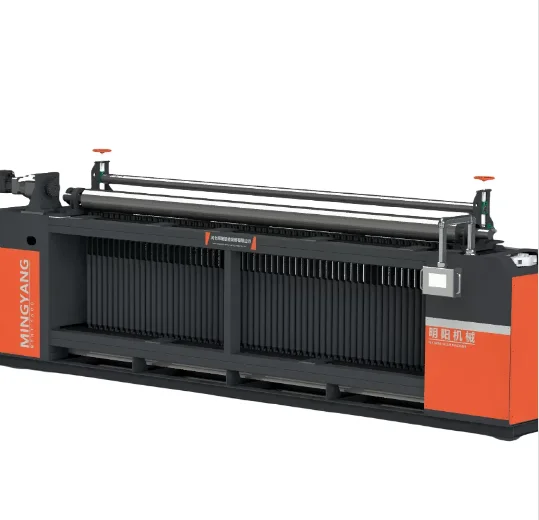
In the realm of modern civil engineering and erosion control, the gabion wire mesh machine stands as a cornerstone of industrial production. These sophisticated systems are engineered to produce high-strength, double-twisted hexagonal wire mesh, which is essential for creating gabions—rock-filled cages used extensively in riverbank stabilization, retaining walls, and coastal protection. As global infrastructure projects move toward more sustainable and flexible solutions, the precision of these machines becomes paramount to ensuring the structural integrity of the resulting mesh.
The global demand for high-quality gabion mesh is driven by an increasing need for environmentally friendly engineering. Unlike solid concrete walls, the mesh produced by a gabion wire mesh machine allows for natural drainage and adapts to ground movement, reducing the risk of catastrophic failure. This flexibility makes it a preferred choice for governments and international development agencies working on disaster mitigation and climate adaptation strategies in vulnerable regions.
Investing in a high-performance gabion wire mesh machine means moving beyond simple weaving to a process of precision engineering. From the integration of servo motors for exacting accuracy to PLC-controlled twisting patterns, modern machinery ensures that the wire diameter and mesh size meet rigorous international standards. This technological evolution allows manufacturers to scale their production while maintaining a level of quality that guarantees long-term stability in the most demanding outdoor environments.

Industrial Significance of the Gabion Wire Mesh Machine
The gabion wire mesh machine is not merely a piece of factory equipment; it is the engine behind critical erosion control and soil stabilization efforts worldwide. By automating the complex process of double-twisting wire, these machines create a mesh that does not unravel even if a single wire is cut, providing a level of security essential for high-risk environments like mountain slopes and riverbeds.
In an era where rapid urbanization often clashes with environmental preservation, the ability to produce heavy-duty mesh quickly and accurately is a competitive advantage. The industrial significance lies in the shift from manual or semi-automatic processes to fully PLC-driven systems, which eliminate human error and ensure that every meter of mesh produced adheres to the required tensile strength and mesh size specifications.
Technical Architecture and Core Components
At the heart of a professional gabion wire mesh machine is a robust structural design. High-end models feature a patented integrated double rack design, which significantly reduces the footprint during rack movement while enhancing overall stability. By utilizing a front and rear dual rack system where both racks are powered, the machine achieves a more streamlined structure that is inherently safer and more stable during high-speed operations.
The transition to servo motors as the primary power source has revolutionized the debugging and operational phases. Unlike traditional mechanical drives, servo motors allow for precise control over every movement, leading to higher machining accuracy and faster weaving speeds. This electronic precision ensures that the wire diameter (ranging from 2.0mm to 4.0mm) is handled with consistent tension, preventing deformities in the hexagonal structure.
Lubrication and maintenance are handled via fully enclosed lubricating oil tanks located on both sides of the equipment. By employing a timed circulation lubrication method, the machine ensures that all motion mechanisms are fully lubricated while simultaneously cleaning the system. This critical design feature prevents dust and industrial impurities from entering the operating mechanism, which is vital for maintaining the longevity of a machine weighing over 18 tons.
Precision Engineering for Heavy-Duty Production
To achieve industrial-grade durability, the gabion wire mesh machine utilizes a PLC system equipped with dual twist data. This allows operators to switch between three, five, and seven twists with a single key press, providing the flexibility to produce different mesh densities depending on the end-use requirement, whether it be for light landscaping or heavy-duty hydraulic engineering.
One of the most significant engineering breakthroughs in the gabion wire mesh machine is the elimination of cumbersome electronic cam programming. The current design allows for the arbitrary switching of intermittent and continuous rotation states for the thorn shaft, enabling equipment adjustments in any operating state at any position without halting the entire production line.
This level of precision is complemented by the ability to customize mesh width and size. While standard sizes like 5070mm, 6080mm, 7090mm, and 80100mm are common, the adaptability of the gabion wire mesh machine ensures that bespoke engineering requirements can be met without requiring a total machine overhaul.
Operational Efficiency and Performance Metrics
Operational efficiency in a gabion wire mesh machine is measured by its ability to maintain high weaving speeds without sacrificing the accuracy of the twist. By integrating servo-driven power and a dual-rack design, these machines minimize downtime and maximize output, making them ideal for large-scale industrial contractors who must meet strict project deadlines.
The synergy between the main weaving engine, the spring winding machine, and the gabion wire mesh cutting machine creates a seamless production flow. This integrated approach reduces the need for manual handling of the mesh, thereby reducing material waste and increasing the overall safety of the factory floor.
Performance Comparison of Gabion Wire Mesh Machine Configurations
Global Applications in Infrastructure
The output of a gabion wire mesh machine is deployed in diverse geopolitical contexts. In mountainous regions of Asia and South America, these meshes are used to create gravity retaining walls that prevent landslides during monsoon seasons. Because the mesh is flexible, it can settle into the natural contours of the landscape, providing a more organic and stable solution than rigid concrete.
Furthermore, in coastal protection projects across Europe and Africa, gabions produced by these machines serve as breakwaters and revetments. The ability to customize the wire diameter up to 4.0mm ensures that the cages can withstand the immense pressure of crashing waves and the corrosive nature of saltwater, provided the wire is properly galvanized or coated.
Long-Term Value and Sustainability
From a financial perspective, the long-term value of a high-quality gabion wire mesh machine lies in its durability and low maintenance requirements. With a main engine weight exceeding 18 tons and self-processed core components, these machines are built for decades of service. The timed circulation lubrication system drastically reduces wear and tear, ensuring that the initial capital investment is amortized over a very long operational lifespan.
Sustainability is another key driver. Gabion structures are inherently "green" as they allow for the infiltration of water and the growth of vegetation through the mesh. By producing the mesh with an efficient, low-waste gabion wire mesh machine, manufacturers contribute to a construction cycle that prioritizes local stone filling over carbon-intensive concrete pouring.
Moreover, the social impact is significant. In post-disaster relief operations, the rapid deployment of gabion walls can stabilize critical road networks and prevent further loss of land. The reliability of the machine ensures that the mesh provided to these projects is safe and compliant, providing dignity and security to the communities being rebuilt.
Future Trends in Mesh Manufacturing Technology
The future of the gabion wire mesh machine is trending toward complete digitalization. We are seeing a shift toward "Smart Factories" where the PLC systems are connected to cloud-based monitoring tools. This allows plant managers to track production speeds, wire consumption, and machine health in real-time, predicting maintenance needs before a breakdown occurs.
Innovations in material science are also influencing machine design. As new high-tensile alloys and eco-friendly coatings are developed, the gabion wire mesh machine must evolve to handle these materials without causing surface abrasions. This requires further refinements in the servo-motor control and the smoothing of all contact points within the weaving mechanism.
Finally, the move toward modularity will allow manufacturers to quickly swap out components to produce different types of mesh—from standard gabions to reverse hexagonal or welded variants—on the same production line. This versatility will enable smaller manufacturers to compete in a global market by offering a wider variety of products without investing in dozens of different machines.
Technical Specification and Comparison of Gabion Machine Variants
| Model Feature |
Technical Capacity |
Performance Score |
Application Suitability |
| Wire Diameter Range |
2.0mm - 4.0mm |
10/10 |
Heavy-Duty Engineering |
| Twist Configuration |
3/5/7 Twists (PLC) |
9/10 |
Custom Mesh Density |
| Drive System |
Full Servo Motors |
10/10 |
High-Precision Weaving |
| Lubrication Method |
Timed Circulation |
8/10 |
Long-term Maintenance |
| Rack Design |
Integrated Double Rack |
9/10 |
Space-Efficient Factory |
| Control System |
PLC Heavy Type |
10/10 |
Automated Production |
FAQS
A PLC-controlled machine offers unprecedented flexibility and precision. It allows operators to switch between 3, 5, and 7 twists with a single button, eliminating the need for complex manual re-tooling. Additionally, it removes the need for cumbersome electronic cam programming, allowing for real-time adjustments of the thorn shaft's rotation state during operation, which significantly increases production uptime and reduces waste.
The patented integrated double rack design optimizes the machine's footprint, taking up less space during movement. More importantly, it provides a more streamlined and balanced structure, which increases stability during high-speed weaving. Since both racks are powered, the machine maintains consistent tension across the mesh width, leading to higher machining accuracy and a more uniform final product.
Yes, the heavy-type gabion wire mesh machine is designed for versatility. It can handle wire diameters from 2.0mm to 4.0mm and supports various mesh sizes such as 5070mm, 6080mm, 7090mm, and 80100mm. Furthermore, the machine parameters can be customized to meet specific project requirements, ensuring that the manufacturer can produce everything from lightweight fencing to heavy-duty civil engineering cages.
Servo motors provide exact control over position and speed, which is critical for the intricate double-twisting process. They make debugging significantly easier and allow for faster weaving speeds without compromising the structural integrity of the mesh. This leads to a higher output of "first-pass" quality mesh, reducing the need for manual corrections and lowering overall operational costs.
The machine features fully enclosed lubricating oil tanks on both sides. By using a timed circulation lubrication method, it doesn't just lubricate the motion mechanisms—it also provides a cleaning function. This system prevents dust and impurities from entering the delicate operating mechanisms, which is essential for a machine that weighs over 18 tons and operates in industrial environments.
To complete the production line, the main weaving machine is typically paired with a Spring Winding Machine and a Gabion Wire Mesh Cutting Machine. This creates a fully integrated workflow where the mesh is woven, finished with edge springs for closure, and cut to precise lengths, allowing for a streamlined process from raw wire to a finished gabion cage.
Conclusion
The gabion wire mesh machine represents the pinnacle of specialized equipment manufacturing, blending heavy-duty structural integrity with the precision of modern PLC and servo-motor technology. By optimizing every aspect of the production process—from the integrated double-rack design to the timed circulation lubrication—these machines enable the creation of high-strength mesh that is indispensable for global infrastructure and environmental protection. The ability to customize twists, wire diameters, and mesh sizes ensures that manufacturers can meet the most rigorous engineering standards while maintaining high operational efficiency.
Looking forward, the integration of smarter automation and sustainable material handling will further elevate the role of the gabion wire mesh machine in the transition toward "green" construction. For companies looking to lead in the civil engineering supply chain, investing in high-precision, heavy-duty machinery is not just an operational upgrade, but a strategic commitment to quality and sustainability. To explore our full range of high-performance weaving solutions, visit our website: www.htmeshmachines.com.