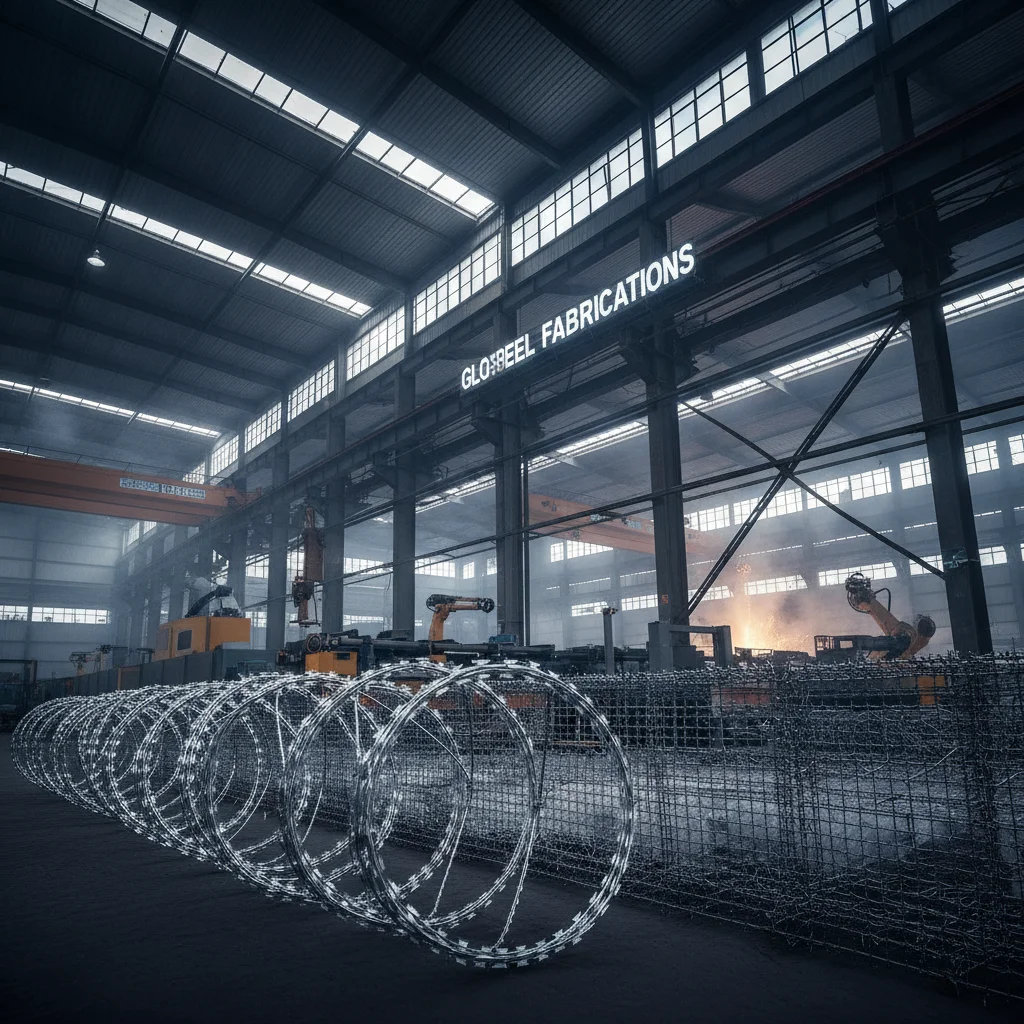
Crusher screen mesh plays a vital role in numerous industrial processes, from mining and aggregate production to recycling and waste management. It’s a fundamental component in size reduction, ensuring materials are processed to specific granularities for various applications. The efficiency and longevity of this mesh directly impact operational costs and product quality, making its understanding and optimal selection paramount. This mesh isn’t simply a filtering device; it’s a crucial element in achieving desired material specifications and streamlining industrial workflows.
Globally, the demand for efficient and reliable material processing is consistently increasing, driven by infrastructure development, resource scarcity, and a growing emphasis on sustainable practices. The need for effective crusher screen mesh is therefore escalating, demanding continuous innovation in materials, designs, and manufacturing techniques. Understanding the nuances of different mesh types—their durability, aperture size, and flow rates—is critical for businesses operating within these competitive landscapes.
The economic impact of properly selected crusher screen mesh is significant. Reduced downtime due to mesh failure, increased processing capacity, and improved product consistency all translate into substantial financial gains. Furthermore, advancements in mesh technology contribute to more environmentally friendly operations by reducing material waste and improving energy efficiency. This makes the study and implementation of optimized crusher screen mesh a necessity for modern industries.
The Significance of Crusher Screen Mesh
The importance of crusher screen mesh often lies understated, yet it’s a pivotal factor influencing the entire efficiency of crushing and screening operations. Its selection directly impacts throughput, product quality, and the operational lifespan of the crusher itself. A poorly chosen mesh can lead to frequent blockages, increased wear and tear, and ultimately, higher maintenance costs.
The global market for aggregate materials, a primary user of crusher screen mesh, is substantial and continually growing, largely driven by construction activities in emerging economies. Therefore, optimizing crusher screen mesh performance is not merely a matter of operational efficiency, but also a significant contributor to economic sustainability and infrastructure development.
Defining Crusher Screen Mesh
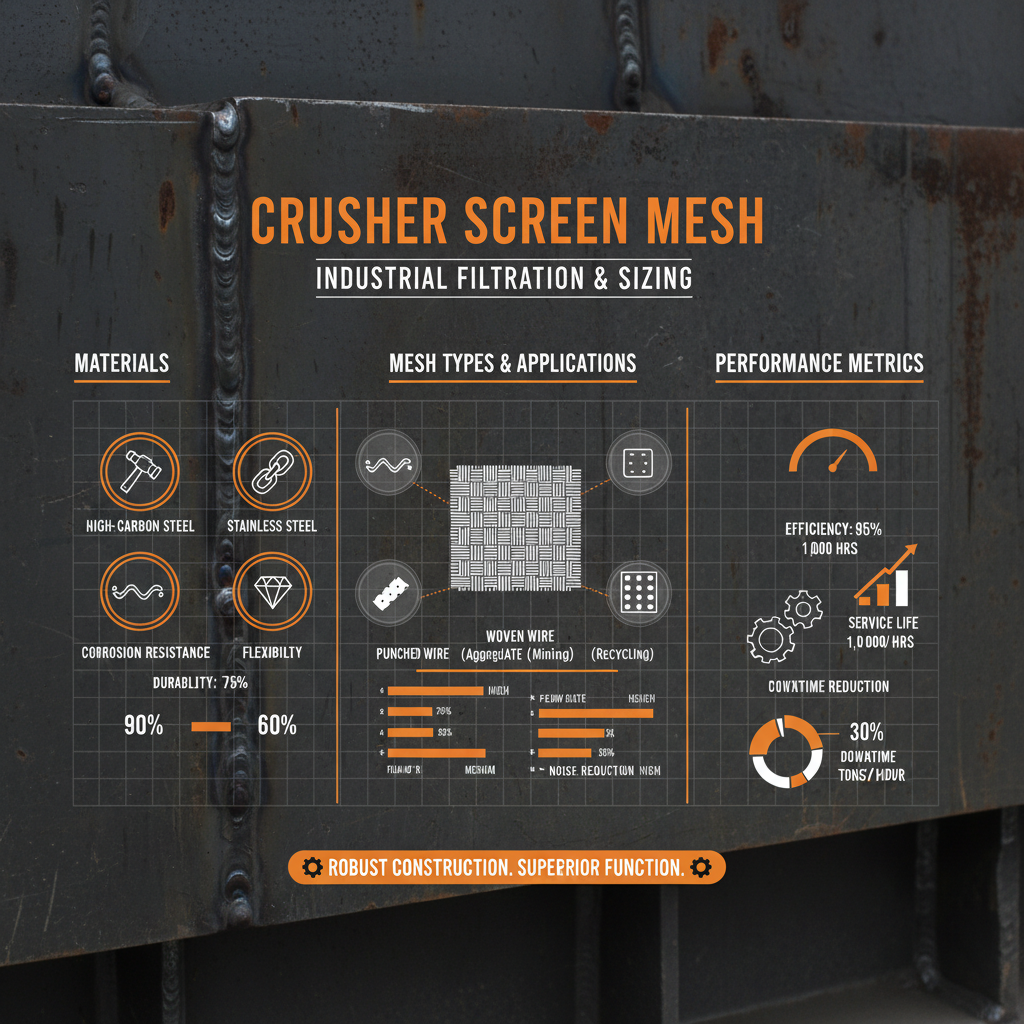
Crusher screen mesh, in its simplest form, is a woven or fabricated material used to separate materials based on particle size. It’s typically constructed from metals like steel (high-carbon, stainless), alloys, or increasingly, durable polymers, depending on the application and the materials being processed. The 'mesh' refers to the number of openings per linear inch, indicating the aperture size and thus the granularity of the material that can pass through.
Historically, these meshes were relatively simple, relying on basic weaving techniques. However, modern manufacturing allows for highly engineered meshes with varying wire profiles (square, rectangular, crimped), opening shapes, and weaving patterns. This customization enables optimal performance for specific crushing and screening tasks. The connection to modern industry is undeniable; without effective screening, many manufacturing processes would be impossible.
The humanitarian needs connection stems from disaster relief and resource management. In post-disaster scenarios, quickly processing rubble and separating recyclable materials requires durable and efficient crusher screen mesh. Similarly, in resource-scarce regions, effective screening is critical for extracting valuable minerals and ensuring access to clean water.
Core Properties of Crusher Screen Mesh
Several key properties define the performance and suitability of crusher screen mesh. First is Durability, referring to the mesh's resistance to abrasion, impact, and fatigue. This is vital in aggressive crushing environments, minimizing downtime and replacement costs.
Secondly, Aperture Accuracy is critical – consistent opening sizes ensure accurate particle separation, preventing contamination and maintaining product quality. Fluctuations in aperture size can lead to inconsistent output and process inefficiencies. Thirdly, Flow Rate or ‘open area’ directly impacts throughput; a mesh with a higher open area allows materials to pass through more quickly, increasing processing capacity.
Beyond these, Tensile Strength ensures the mesh can withstand the stresses imposed during operation without tearing or deforming. Corrosion Resistance is paramount in environments where exposure to harsh chemicals or moisture is prevalent, preventing degradation and extending service life. Finally, Elasticity contributes to the mesh’s ability to absorb impact and maintain its shape, reducing the risk of premature failure.
Practical Applications Across Industries
The applications of crusher screen mesh are diverse. In the Mining Industry, it’s used for separating ore from waste rock, classifying minerals by size, and preparing materials for further processing. The Aggregate Industry relies heavily on it for producing materials of specific gradations for road construction, concrete production, and other building applications.
The Recycling Industry utilizes crusher screen mesh to separate various materials – plastics, metals, glass – for reuse. It’s crucial for processing construction and demolition debris, recovering valuable resources, and diverting waste from landfills. In Agriculture, screening is employed to remove impurities from soil, grade seeds, and classify fertilizers.
Even the Pharmaceutical Industry relies on precise screening techniques utilizing specialized meshes for powder processing and particle size control. From ensuring the purity of drug ingredients to controlling the flowability of powders, the right crusher screen mesh is a critical component in pharmaceutical manufacturing.
Crusher Screen Mesh Performance Metrics by Method
Advantages and Long-Term Value Proposition
Investing in high-quality crusher screen mesh provides tangible benefits beyond immediate operational improvements. Reduced downtime due to fewer mesh failures translates directly into increased production and cost savings. A robust mesh minimizes material loss, maximizing resource utilization and enhancing profitability. These factors contribute to a lower total cost of ownership.
The long-term value extends to sustainability. Efficient screening reduces waste, promoting responsible resource management. Durable meshes require less frequent replacement, minimizing environmental impact associated with manufacturing and disposal. Furthermore, improved product quality enhances customer satisfaction, building trust and brand reputation.
Global Usage and Regional Impact
The demand for crusher screen mesh is globally distributed, with significant concentrations in regions undergoing rapid industrialization and infrastructure development. Asia-Pacific, particularly China and India, represents the largest market, driven by extensive construction and mining activities. North America and Europe also maintain substantial demand, focusing on infrastructure maintenance and recycling initiatives.
In Africa, the application of crusher screen mesh is gaining traction as mining operations expand and infrastructure projects are implemented. Latin America sees increasing demand for screening solutions within the agricultural sector. Understanding regional nuances – material types, operational conditions, and regulatory requirements – is crucial for providing tailored mesh solutions.
Future Trends and Material Innovations
The future of crusher screen mesh is poised for innovation, driven by the need for increased efficiency, sustainability, and performance. Advancements in materials science are leading to the development of new alloys and polymers with superior strength, abrasion resistance, and corrosion protection. Self-cleaning mesh technologies are also emerging, minimizing blockages and maximizing throughput.
Digital technologies, such as sensor-equipped meshes and predictive maintenance algorithms, are enabling real-time monitoring of mesh condition, allowing for proactive replacements and minimizing unplanned downtime. The integration of automation and machine learning is further optimizing screening processes, improving efficiency and reducing operational costs.
Sustainability remains a key driver, with a growing emphasis on recyclable materials and eco-friendly manufacturing processes. Bio-based polymers and innovative mesh designs focused on minimizing material usage are gaining prominence.
Summary of Crusher Screen Mesh Performance Factors
| Mesh Material |
Aperture Size (mm) |
Operational Environment |
Estimated Lifespan (months) |
| High-Carbon Steel |
2.0 |
Dry, Non-Abrasive |
6 |
| Stainless Steel 316 |
1.5 |
Wet, Mildly Corrosive |
9 |
| Polyurethane |
3.0 |
Highly Abrasive |
4 |
| High-Tensile Alloy |
1.0 |
Impact-Heavy |
7 |
| Composite Material |
2.5 |
Variable |
8 |
| Woven Wire (Carbon Steel) |
4.0 |
General Purpose |
5 |
FAQS
When choosing crusher screen mesh, consider the material being processed (abrasiveness, moisture content), the desired particle size, the type of crusher, and the operational environment (temperature, humidity). Mesh material, aperture size, and weave pattern all play crucial roles. Ignoring these factors can lead to premature failure, reduced throughput, and inconsistent product quality. Also factor in cost vs. lifespan to get the most economical solution.
Regular inspection and maintenance are key. Check for wear and tear, blockages, and damage. Avoid overloading the crusher, which puts undue stress on the mesh. Implement a preventative maintenance schedule for timely replacements. Consider using a mesh with a higher abrasion resistance if processing highly abrasive materials. Proper installation and tensioning also contribute to longevity.
Stainless steel mesh offers superior corrosion resistance, making it ideal for wet or corrosive environments. While typically more expensive than carbon steel, its longer lifespan and reduced maintenance requirements can result in lower overall costs. It’s also preferred in applications where material purity is critical, such as food processing or pharmaceuticals.
The aperture size dictates the granularity of the material that passes through the mesh. A smaller aperture yields finer particles, while a larger aperture allows coarser materials to pass. Choosing the correct aperture size is crucial for achieving the desired product specifications. Incorrect sizing can result in contamination, inefficient separation, and reduced throughput.
Yes, there's a growing trend towards sustainable materials. Recycled metals are increasingly used in mesh manufacturing, reducing environmental impact. Furthermore, research is underway to develop bio-based polymer meshes as alternatives to traditional materials. Selecting a mesh that maximizes lifespan and minimizes waste also contributes to sustainability.
Common signs include reduced throughput, inconsistent particle size distribution, increased noise levels, visible tears or holes in the mesh, and frequent blockages. Regular visual inspections can identify potential issues early. If you observe any of these signs, it’s time to consider replacing the mesh to prevent further damage and maintain optimal performance.
Conclusion
Crusher screen mesh is far more than a simple component; it's a fundamental element underpinning numerous industries, impacting efficiency, product quality, and sustainability. Understanding its properties, applications, and future trends is crucial for optimizing operations and achieving long-term success. The selection of the appropriate mesh—considering material, aperture size, and operational conditions—directly translates into reduced costs, increased throughput, and enhanced profitability.
Looking ahead, innovation in materials science, digital technologies, and sustainable manufacturing practices will continue to reshape the landscape of crusher screen mesh. Investing in these advancements will not only improve operational efficiency but also contribute to a more responsible and environmentally conscious approach to resource management. Visit www.htmeshmachines.com to explore our range of high-performance crusher screen mesh solutions and learn how we can help you optimize your operations.