Hit enter to search or ESC to close
Selecting a wire weaving system is often a balancing act between production speed, mesh precision, and long-term operational costs. For manufacturers focusing on poultry enclosures, gabion structures, or industrial filtration, the efficiency of the weaving process directly dictates the market competitiveness of the final product.
The shift toward automation has redefined how hexagonal mesh is produced, moving away from labor-intensive manual adjustments toward PLC-controlled systems. Modern requirements now demand versatility—the ability to switch between galvanized iron wire and plastic-coated materials without extensive downtime or loss of structural integrity.
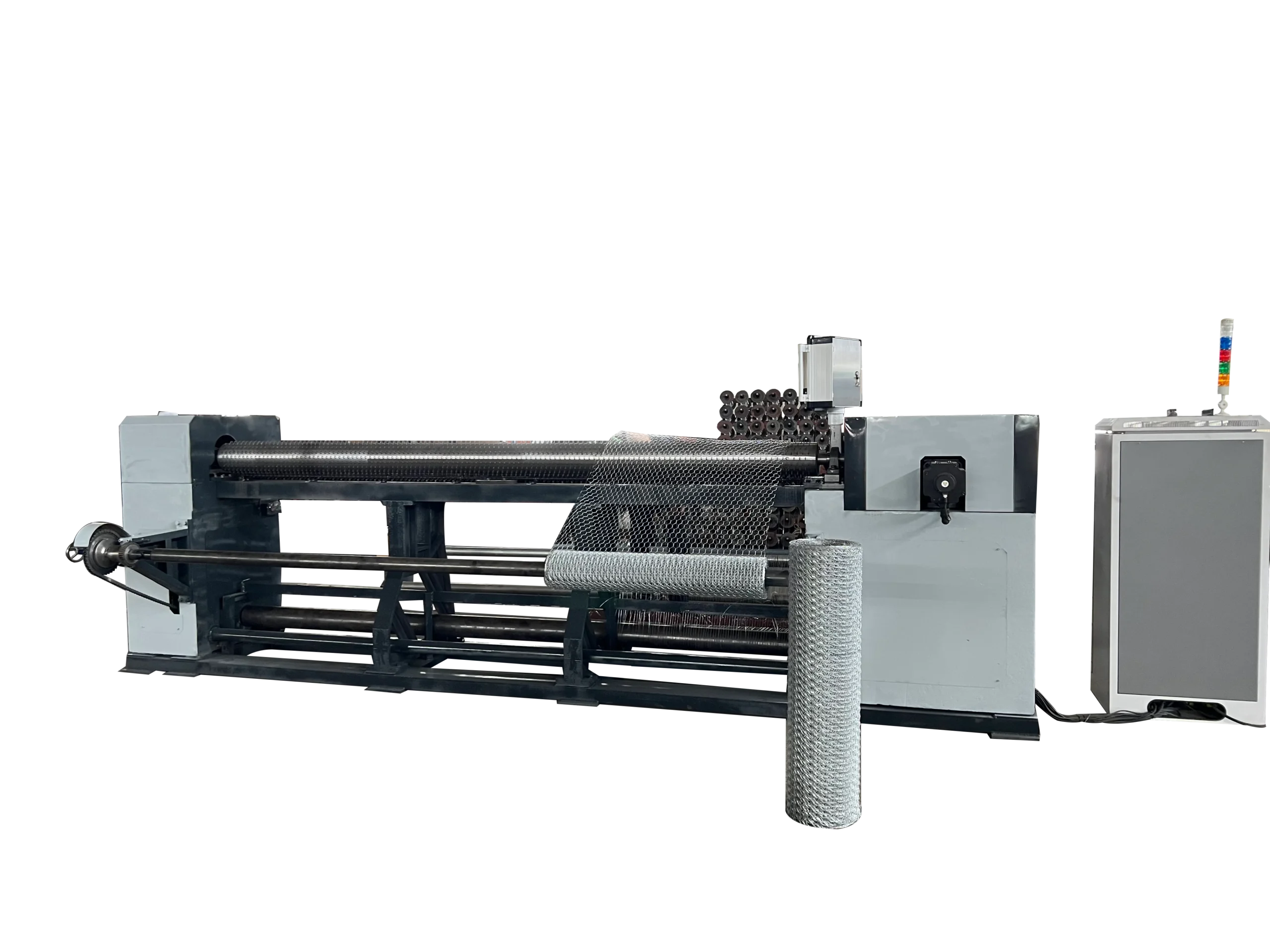
Understanding the technical nuances of a hexagonal wire mesh machine is essential for optimizing output and reducing waste. This guide examines the critical design factors and selection criteria necessary for implementing a high-efficiency production line.


The transition from traditional mechanical looms to intelligent weaving systems has been driven by the need for smaller mesh sizes and higher uniformity. Early machines struggled with consistency in the "twist" of the wire, often leading to structural weaknesses or irregular mesh shapes that failed quality audits in civil engineering projects.
Recent innovations have introduced positive twisted designs, allowing for a minimum mesh size as small as 10mm. This leap in capability enables the production of finer mesh used in specialized applications like pipeline insulation and decorative floral arrangements, expanding the market reach beyond simple agricultural fencing.
Modern machine architecture has shifted toward a horizontal structure, which significantly improves the stability of the equipment during high-speed operation. By distributing the mechanical load across a balanced horizontal plane, vibration is minimized, which in turn reduces the wear and tear on critical components and ensures a smoother weave.
The integration of Programmable Logic Controllers (PLC) has fundamentally changed the operational requirements of these machines. Where previously a team of skilled technicians was needed to monitor and adjust tension and timing, PLC systems now automate these variables. This simplification allows a small crew—often just two operators—to manage the entire production cycle, drastically lowering long-term labor overhead.
Beyond simple control, PLC integration allows for rapid reconfiguration. When a manufacturer needs to switch from a 20mm mesh to a 55mm mesh, the digital interface reduces the time spent on manual recalibration, ensuring that the transition is precise and the downtime is minimal.
The versatility of a weaving machine is defined by its ability to handle different wire coatings and diameters. Most industrial-grade machines are now designed to process both galvanized iron wire, for high-strength applications, and PVC-coated wire, for environments requiring corrosion resistance.
The critical technical challenge in hexagonal weaving is maintaining consistent tension across varying wire diameters—ranging from 0.38mm for fine mesh to 1.5mm for heavy-duty fencing—without causing deformation in the hexagonal cell.
Material selection impacts the machine's motor requirements and speed. Heavier gauge wires require higher torque and more robust motor power (typically ranging from 3KW to 5KW) to ensure that the twist is locked securely. Failure to match the motor capacity to the wire diameter often results in "skipped" twists or inconsistent mesh widths.
Evaluating the efficiency of a production line requires looking beyond the raw speed of the machine. One must consider the "effective output," which accounts for setup time, material waste, and electricity consumption. Modern designs focus on reducing the physical footprint of the machine, which not only saves factory space but also optimizes the power distribution to the drive motors.
When comparing different configurations, the relationship between mesh size and production speed becomes evident. Smaller mesh sizes generally require more precise twisting movements, while larger mesh sizes can be processed faster, provided the horizontal stability of the machine is maintained to prevent oscillation.
The utility of hexagonal mesh extends far beyond basic fencing. In civil engineering, gabion wire mesh is used for erosion control and retaining walls, where the hexagonal structure provides the necessary flexibility to settle into the terrain while maintaining high load-bearing capacity. The ability to produce customized mesh widths (up to 2300mm) allows manufacturers to serve these large-scale infrastructure projects.
In more specialized sectors, small-aperture hexagonal mesh is utilized for pipeline insulation and breeding cages. The demand for PET-material fishing nets and polyester mesh has also grown, necessitating machines that can handle synthetic fibers. Hebei Mingyang Intelligent Equipment Co., Ltd. has addressed these needs by developing specialized PET hexagonal mesh machines capable of significantly higher speeds than traditional international alternatives.
The industry is moving toward "smart factories" where the weaving machine is part of an integrated ecosystem. This includes the automated feeding of wire from drawing machines and the automatic spooling of finished mesh. The goal is to eliminate manual handling entirely, reducing the risk of wire tangling and material deformation.
Another significant trend is the optimization of energy consumption. By refining the motor drive systems and reducing the physical volume of the machinery, manufacturers are seeing a marked decrease in electricity costs per meter of mesh produced. This shift is critical as global energy prices fluctuate and environmental regulations tighten.
Finally, the integration of IoT sensors for predictive maintenance is becoming a reality. Instead of scheduled downtime, sensors can detect abnormal vibrations or tension drops in real-time, alerting operators to replace a component before a failure occurs, thereby ensuring continuous, stable output in harsh production environments.
When investing in a hexagonal wire mesh machine, the decision should be based on a technical matrix rather than price alone. A machine that is cheap but lacks PLC control will eventually cost more in labor and waste. Similarly, a machine designed only for galvanized wire will fail when tasked with processing plastic-coated materials.
The critical parameters to evaluate include the range of wire diameters the machine can handle and the minimum mesh size it can realistically achieve. A "customizable type" machine provides the most flexibility, allowing the producer to pivot their product line based on seasonal market demand, such as switching from agricultural fences to floral decoration mesh.
Ultimately, the choice depends on the intended application. High-tension gabion mesh requires a different mechanical stress profile than fine breeding mesh. The following framework outlines the relative suitability of different machine configurations based on common production goals.
| Production Goal | Critical Parameter | Recommended Design | Suitability Index |
|---|---|---|---|
| Fine Decoration Mesh | Min Mesh Size 10mm | Positive Twisted / PLC | High |
| Heavy Gabion Mesh | Wire Dia 1.2mm - 1.5mm | Horizontal Heavy Duty | High |
| PVC Coated Fencing | Coating Compatibility | Adjustable Tension System | Medium |
| High-Volume Output | Motor Power 5KW+ | Automatic PLC Control | High |
| Low-Budget Entry | Basic Mechanical | Standard Twist Design | Medium |
| Customized Orders | Variable Mesh Width | Modular Adjustable Frame | High |
Positive twisted machines are designed to create a specific directional twist in the wire, which often allows for much smaller minimum mesh sizes (down to 10mm). This is critical for specialized applications like pipeline insulation or fine breeding cages. Negative twist machines are more traditional and typically used for standard agricultural fencing where the absolute minimum aperture is less critical than high-speed bulk production.
PLC (Programmable Logic Controller) systems automate the timing and tensioning of the weaving process. In traditional machines, a skilled operator must manually adjust settings, which is time-consuming and prone to human error. PLC systems allow for "one-touch" setting changes and require far fewer personnel to oversee the machine—often reducing the required staff from several technicians to just two operators, significantly cutting monthly payroll costs.
Yes, provided the machine is designed with adjustable tensioners and appropriate rollers. Plastic-coated wire has a different friction coefficient and elasticity than bare galvanized iron wire. High-quality machines are engineered to accommodate these differences, allowing manufacturers to weave various materials on a single production line, though the machine speed may need to be adjusted via the PLC to ensure the coating is not damaged during the twist.
The maximum mesh width is primarily determined by the physical width of the horizontal frame and the capacity of the wire feeding system. Industrial machines typically offer widths up to 2300mm. When selecting a machine, you must ensure the frame is rigid enough to prevent sagging at these widths, as any structural flex can cause the hexagonal cells to become irregular across the center of the mesh.
A horizontal structure provides better mechanical balance and reduces the impact of gravity on the wire tension during the weaving process. This leads to a smoother run with fewer vibrations, which extends the life of the bearings and gears. Furthermore, horizontal machines are generally easier to maintain and load with wire spools, improving the overall ergonomic flow of the factory floor.
The choice depends on the wire diameter and production speed. For fine mesh using wire under 0.8mm, a 3KW motor is usually sufficient. However, for heavy-duty mesh (1.0mm to 1.5mm), a 5KW motor is necessary to provide the torque required to twist the thicker wire without stalling or overheating. Selecting an underpowered motor will lead to inconsistent twists and frequent mechanical failures.
The transition toward automated, PLC-driven hexagonal weaving marks a shift from simple manufacturing to precision engineering. By prioritizing structural stability, material versatility, and labor efficiency, producers can move beyond commodity fencing into high-value specialized mesh markets.
Ultimately, the most successful operations are those that match their machinery to their specific target application—whether that is the heavy-duty requirements of gabion construction or the precision of fine-mesh industrial filters. Investing in a system that balances technical capability with operational simplicity is the only way to ensure sustainable growth in the wire mesh industry.