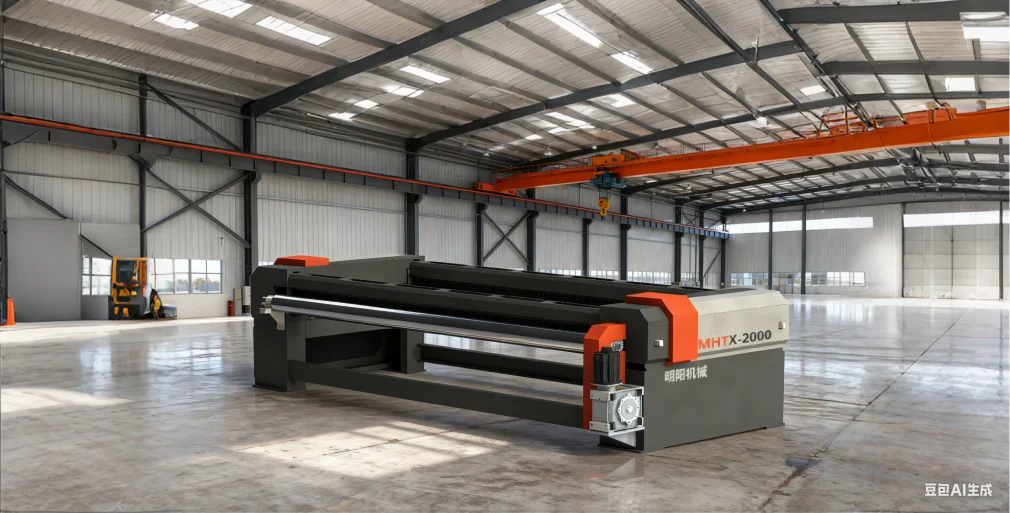
A gabion wire mesh machine is a critical piece of industrial equipment used to produce heavy-duty hexagonal wire mesh, which is subsequently filled with stones to create retaining walls, erosion control barriers, and riverbank reinforcements. Within the specialized field of metallurgical and mining equipment manufacturing, these machines must handle high-tensile galvanized wire to ensure the resulting baskets can withstand extreme environmental pressures and geological shifts.
For manufacturers and procurement officers, the primary challenge lies in balancing weaving speed with structural integrity. A machine that produces mesh too quickly without precise twists may result in baskets that unravel under load, while overly slow production limits ROI. Finding a solution that integrates precision servo control with a heavy-duty frame is essential for maintaining consistency in mesh size and wire tension.
This professional analysis provides a deep dive into the technical specifications, operational advantages of PLC-controlled heavy-type machines, and a practical framework for evaluating suppliers in the wire mesh machinery industry to ensure long-term production stability.

Core Mechanics of Gabion Mesh Weaving

The production of gabion mesh relies on a complex twisting process where parallel wires are interlaced to form a stable hexagonal structure. Unlike standard chain-link fences, gabion mesh requires a specific number of twists—typically three, five, or seven—to ensure the edges of the mesh are locked. This locking mechanism is what prevents the mesh from sliding when filled with heavy rock material.
From an engineering perspective, the tension of the wire during the weaving process determines the uniformity of the mesh size. If the tension fluctuates, the resulting "stone cages" will have inconsistent dimensions, potentially leading to structural failure in civil engineering projects. High-precision machines utilize timed circulation lubrication to ensure the motion mechanisms operate without friction-induced jerks.
Technical Specifications for Heavy-Duty Production
Heavy-type gabion machines are designed to process thicker wires, typically ranging from 2.0mm to 4.0mm. The structural integrity of the machine itself is paramount; for instance, high-capacity main engines often exceed 18 tons to dampen vibrations during high-speed weaving. The mesh width can be customized, often reaching up to 5.6 meters, to accommodate various industrial cage sizes.
Key technical parameters include the mesh size (such as 5070mm, 6080mm, or 80100mm) and the power requirements, which generally fall between 33kW and 45kW. The ability to switch between different twist counts (3/5/7) via a digital interface allows a single production line to serve multiple market needs, from light decorative gabions to heavy river-defense barriers.
The Role of PLC and Servo Motor Integration
Modern gabion wire mesh machines have moved away from cumbersome electronic cam programming in favor of PLC (Programmable Logic Controller) systems and servo motors. This shift allows for "arbitrary switching" of rotation states—meaning the operator can toggle between intermittent and continuous rotation of the thorn shaft without stopping the machine for manual reconfiguration.
Servo motors provide precise torque control, which is essential when processing high-carbon steel wire. By using a PLC equipped with dual twist data, manufacturers can change the mesh specifications with a single key press. This reduces downtime during product changeovers and eliminates the human error associated with manual mechanical adjustments.
Evaluating Operational Efficiency Metrics
When analyzing the efficiency of a gabion production line, the focus is often on the relationship between machining accuracy and weaving speed. In an illustrative conceptual framework, the use of servo-driven systems significantly increases the "Accuracy-to-Speed Ratio" compared to traditional mechanical drive systems.
The data above represents a relative performance index where "Standard Mechanical" is the baseline. It demonstrates how the adoption of PLC controls and dual-rack power designs enhances stability and output consistency, which are the primary drivers of profitability in the specialized equipment manufacturing sector.
Strategic Advantages of Integrated Double Rack Design
A patented integrated double rack design offers significant spatial and operational benefits. By distributing the power across front and rear racks, the machine achieves a more streamlined structure that is inherently more stable. This design reduces the physical footprint of the equipment while increasing the rigidity of the weaving frame, which is critical when working with wire diameters up to 4.0mm.
Furthermore, the inclusion of fully enclosed lubricating oil tanks on both sides, utilizing a timed circulation method, prevents dust and metallic impurities from entering the operating mechanism. This proactive maintenance approach extends the lifespan of the core components and reduces the frequency of unplanned shutdowns.
Common Implementation Risks and Mitigations
One of the most common risks in gabion mesh production is "twist slippage," where the wire does not lock securely, leading to a rejection of the entire batch. This is often caused by incorrect tension settings or worn-out thorn shafts. Implementing a system that allows for adjustment in any operating state—without stopping the machine—allows operators to correct tension in real-time.
Another risk involves the accumulation of debris in the lubrication system. By adopting closed-loop circulation lubrication, manufacturers can mitigate the risk of premature wear on the motion mechanism. Regular calibration of the PLC twist data is also recommended to ensure that the 3, 5, or 7 twists remain precise over thousands of operating hours.
Supplier Evaluation and Selection Framework
Choosing a supplier for a gabion wire mesh machine requires an evaluation of both the mechanical build and the electronic control system. A professional manufacturer should provide evidence of core component self-processing and a robust design that prioritizes machine weight (to reduce vibration) and lubrication efficiency.
| Evaluation Dimension | Conventional Machine | PLC Heavy-Type Machine | Impact on ROI |
|---|---|---|---|
| Control System | Mechanical Cam | PLC + Servo Motors | Lower Downtime |
| Adjustability | Manual Stop/Adjust | Real-time Operating Adjustment | Higher Flexibility |
| Structural Frame | Single Rack / Light | Integrated Double Rack / Heavy | Increased Longevity |
| Lubrication | Manual Grease | Timed Circulation Tanks | Lower Maintenance Cost |
| Twist Versatility | Fixed Configuration | Switchable (3/5/7 twists) | Expanded Market Reach |
| Setup Time | High (hours) | Low (minutes via PLC) | Increased Throughput |
As shown in the framework above, the transition to PLC-driven heavy equipment is not merely a technical upgrade but a strategic business decision that reduces operating costs and increases the variety of products a factory can offer to the construction and mining industries.
Frequently Asked Questions
The number of twists refers to how many times the wire is wrapped around the adjacent wire at the edge of the hexagonal mesh. More twists (e.g., 7) provide a stronger lock, which is essential for heavy-duty cages used in high-pressure environments like river dams.
Yes, heavy-type machines are typically designed to handle a range, such as 2.0mm to 4.0mm. However, the specific settings for tension and speed must be adjusted via the PLC to maintain mesh uniformity for each diameter.
A double rack design distributes the mechanical load more evenly and increases the overall rigidity of the machine. This prevents the frame from flexing during high-speed operation, which ensures higher machining accuracy and reduces wear on core components.
It ensures that all moving parts are consistently lubricated without manual intervention. The enclosed tanks also prevent dust and impurities from the factory floor from mixing with the oil, which protects the motion mechanism from abrasive wear.
Depending on the capacity and wire thickness handled, a heavy-type gabion wire mesh machine typically requires between 33kW and 45kW of power to drive the servo motors and mechanical weaving systems.
Mesh width is determined by the frame size and the number of weaving heads. Manufacturers can customize the width (e.g., up to 5600mm) based on the specific dimensions of the gabion baskets the customer intends to produce.
Conclusion
The selection of a gabion wire mesh machine is a decision that directly impacts the structural quality of the final product and the operational efficiency of the production facility. By prioritizing PLC-controlled servo systems, heavy-duty double rack frames, and automated circulation lubrication, manufacturers can achieve a level of precision and durability that traditional mechanical machines cannot match. The ability to switch twist counts and adjust parameters in real-time ensures a competitive edge in the metallurgical and mining equipment market.
For those evaluating implementation options or seeking customized technical parameters for their production line, detailed solution information is available at www.htmeshmachines.com.